
Whole chickens are a staple product in the poultry industry, essential in both supermarkets and foodservice operations. Effective packaging is crucial not only to preserve quality and safety but also to meet logistical and marketing needs. This guide will walk you through the entire process from chicken processing to common packaging solutions, and how to choose the right method depending on the store environment.
Processing Whole Chickens for Packaging
Before packaging, chickens must go through a detailed processing routine to ensure food safety and product consistency. Here's a general overview:
Slaughtering and Defeathering
The process starts with the humane slaughter of the chicken, followed by defeathering using automated machines. This is usually done in large-scale processing plants under strictly controlled sanitary conditions.
Evisceration
Next, internal organs are removed in a process known as evisceration. This step is critical as it is a common point for potential contamination. Bacterial contamination, such as from Pseudomonas and Achromobacter, can easily occur here.
Washing and Chilling
Carcasses are thoroughly washed, often in a series of baths, and then rapidly chilled using air or water chilling methods. Rapid chilling helps inhibit microbial growth and maintain meat quality.
Grading and Inspection
Chickens are then graded by size, weight, and appearance. Any that do not meet quality standards are removed from the packaging line.
Final Preparation
Before packaging, chickens may be trussed (tied into shape) and sometimes injected with a saline or marinade solution, depending on the product type.
Main Packaging Solutions for Whole Chickens
Packaging solutions for whole chickens are tailored to meet specific storage, transportation, and shelf-life needs. Here are the main methods used today:
Shrink Bag Packaging
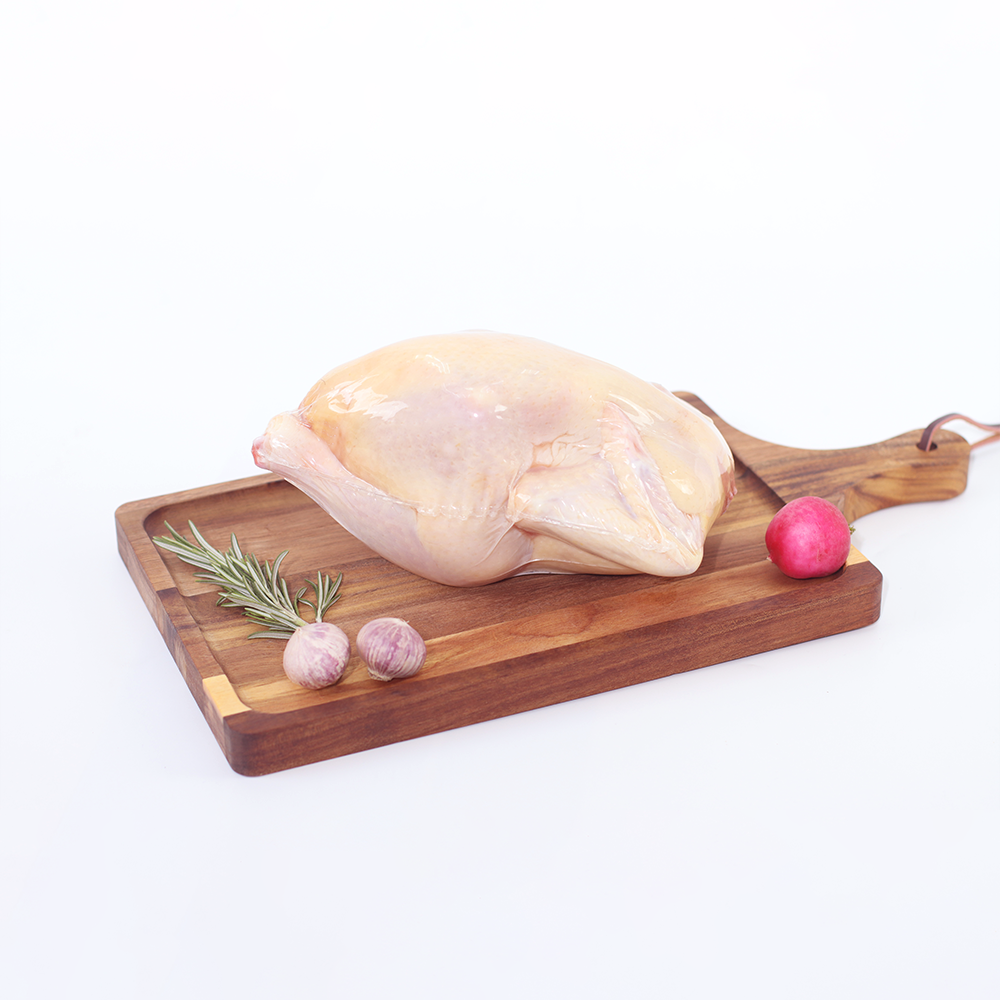
Shrink bags are among the most popular options for whole chickens, suitable for both fresh and frozen applications.
How it works:
- The chicken is placed in a specially designed plastic shrink bag.
- Air is removed, and the bag is heat-sealed.
- The package is passed through a hot water bath or shrink tunnel, causing the film to tightly conform to the product.
Pros:
- Provides a tight, form-fitting appearance that enhances visual appeal.
- Strong barrier against contamination and evaporation.
- Offers branding opportunities with printed shrink film.
Cons:
- Requires heat-shrinking equipment.
- Limited visibility for product presentation compared to tray packs.
Shrink Film Packaging

Shrink film is often used in horizontal flow wrapping (HFFS) systems, particularly common for frozen whole chickens.
How it works:
- The chicken is automatically wrapped in a heat shrink film via HFFS.
- The package is sealed and then exposed to heat to shrink the film.
Pros:
- Efficient for large-scale, high-speed operations.
- Provides excellent protection during freezing and transport.
Cons:
- Less commonly used for fresh chicken in retail display.
- Precise temperature control is needed for optimal shrink performance.
Tray Sealing with Modified Atmosphere Packaging (MAP)

Modified Atmosphere Packaging is widely used for fresh whole chickens sold in retail environments.
How it works:
- The chicken is placed in a pre-formed tray, usually made of PP.
- The tray is sealed with a top film under a gas mixture.
- This modified atmosphere slows microbial growth, especially of spoilage bacteria.
Pros:
- Longer shelf-life than regular tray packaging.
- Enhances safety and product freshness.
- Allows for attractive in-store presentation.
Cons:
- Requires investment in MAP tray sealing systems.
- Relatively high cost
Choosing Suitable Packaging According to Store Environment
Selecting the right packaging method should align with how and where the chicken is sold or stored:
For Fresh Chicken in Supermarkets
Best option: Shrink bag or MAP tray.
Why: Shrink bags offer a hygienic and compact package, while MAP trays provide visibility and extend shelf life.
Environment: Typically stored in refrigerated conditions (0–4°C). The ideal shelf life for MAP is up to 1 week (depending on the gas mixture), while non-barrier shrink bags have a shelf life of 4-7 days.
For Frozen Chicken in Bulk Stores or Export
Best option: Shrink film or shrink bag.
Why: Both methods tightly seal the product to protect it during long freezing periods and transport.
Environment: Stored at freezing temperatures (-18°C or lower) for several months without compromising product integrity.
For Online Retail or Home Delivery
Best option: Shrink bag or MAP.
Why: Shrink bags are compact and secure for shipping. MAP provides enhanced freshness for local deliveries.
Environment: Depends on logistics—frozen for long-distance shipping or chilled for regional delivery.
Conclusion
Efficiently and safely packaging whole chickens is essential for maintaining quality, preventing contamination, and satisfying consumer expectations. While shrink bags and films dominate both fresh and frozen markets, MAP trays are increasingly favored for premium retail display and freshness preservation.
Choosing the right packaging method depends on factors such as shelf life, storage temperature, logistics, and consumer preferences. With the appropriate packaging, poultry producers and retailers can extend product lifespan, reduce spoilage, and deliver a better experience to the end customer.


